


Laboratoire commun : Plateforme numérique pour l’IRM de flux ou fonctionnelle (NumIRM2f)

Our partners

Presentation of the Joint Laboratory

NumIRM2f is a joint laboratory bringing together the Alexander Grothendieck Institute of Montpellier (IMAG, University of Montpellier and CNRS) and Spin Up, an Alara group company.

The project aims to develop a numerical simulation platform for magnetic resonance imaging (MRI) designed for research, training, quality control, and the development of new imaging sequences.

The project

MRI is used in the diagnosis and monitoring of many pathologies, and all medical specialties (cardiology, oncology, neurology, etc.) can benefit from it. Among the various available modalities, MRI offers several advantages: it is non-invasive, non-ionizing, and provides information on tissue morphology and function.

Its use, however, remains complex. Image quality and interpretation depend on numerous acquisition parameters, the technical characteristics of the scanner, and various physical phenomena. The examinations are also longer and more expensive than those performed with certain other imaging modalities.

Numerical simulation provides a way to study these parameters in a controlled environment. It allows for reproducing the acquisition process, evaluating the effect of settings and technological limits, and then comparing the simulated images to real acquisitions.

Our motivation

NumIRM2f aims to advance the work already carried out by IMAG and Spin Up, currently at the proof-of-concept stage, into a simulation platform usable for research, training, and quality control applications.

The platform will need to be capable of producing in silico MRI images representative of the systems used in hospitals. It will progressively integrate physical and technological phenomena that were not accounted for in the initial developments: coil sensitivity, magnetic gradient non-linearity, tissue diffusion, oxygen consumption, magnetization transfer, eddy currents, and magnetic susceptibility effects.

A collaboration spanning several years

The creation of NumIRM2f extends a collaboration initiated in 2015. Two CIFRE theses conducted with IMAG, Alara Expertise, and Spin Up established the feasibility of a virtual MRI applied to cardiovascular hemodynamics and the optimization of imaging parameters.

PhD students involved in the project

The objective of this thesis is to extend the work on flow MRI simulation carried out by T. Puiseux (2019) and M. Garreau (2023). It involves incorporating technological effects into the digital platform, such as gradient non-linearities, as well as physical effects like concomitant gradients. The work already completed consists of improving the simulator, leading to reduced simulation times, and adding the capability to generate morphological images. Ongoing developments relate to the simulation of artifacts.

Clément Fraud (2025-2028) : Numerical simulation of artifacts in flow and diffusion magnetic resonance imaging

This project aims to evaluate radial sampling methods in 4D flow MRI to improve the accuracy of velocimetric measurements and better resolve aortic movements. To this end, several numerical simulations of aortic flows are performed by imposing movements on the aortic meshes to better understand and optimize the acquisition parameters of MRI sequences.

Delfin Calles Fantova (2025-2028) : Numerical study of radial sampling techniques for quick and reliable flow measures in magnetic resonance imaging. Thesis associated with the joint lab resulting from the RAPIDFLOW project (ANR-24-CE19-1349-03) coordinated by the CREATIS laboratory.

Team

Coordination and scientific development

Simon Mendez

Research scientist at CNRS.
He acts as the architect and lead developer of the YALES2BIO software.

Franck Nicoud

Professor at the University of Montpellier and academic coordinator of the joint laboratory.
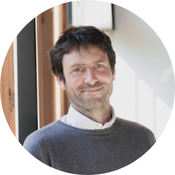
He is the founder and leader of the YALES2BIO group.

Rémy Dubois

Research engineer at CNRS.
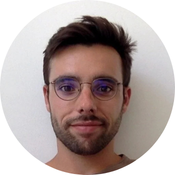
He is in charge of aspects related to high-performance computing and the acceleration of simulations on graphics processing units (GPUs).

Thomas Puiseux

Research and Development Manager at Spin Up.
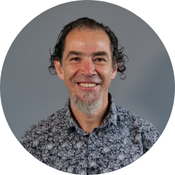
Engineer and PhD in mathematics and modeling, specialized in fluid mechanics and MRI simulation.

Ramiro Moreno

Scientific Director at Spin Up.

Medical physicist and MRI specialist in charge of aspects related to the industrialization of the solutions developed within the LabCom and the execution of experimental measurements.

Scroll to top

We use cookies to guarantee you the best experience on our website. By continuing to use this site you agree to this use. See our privacy policy.